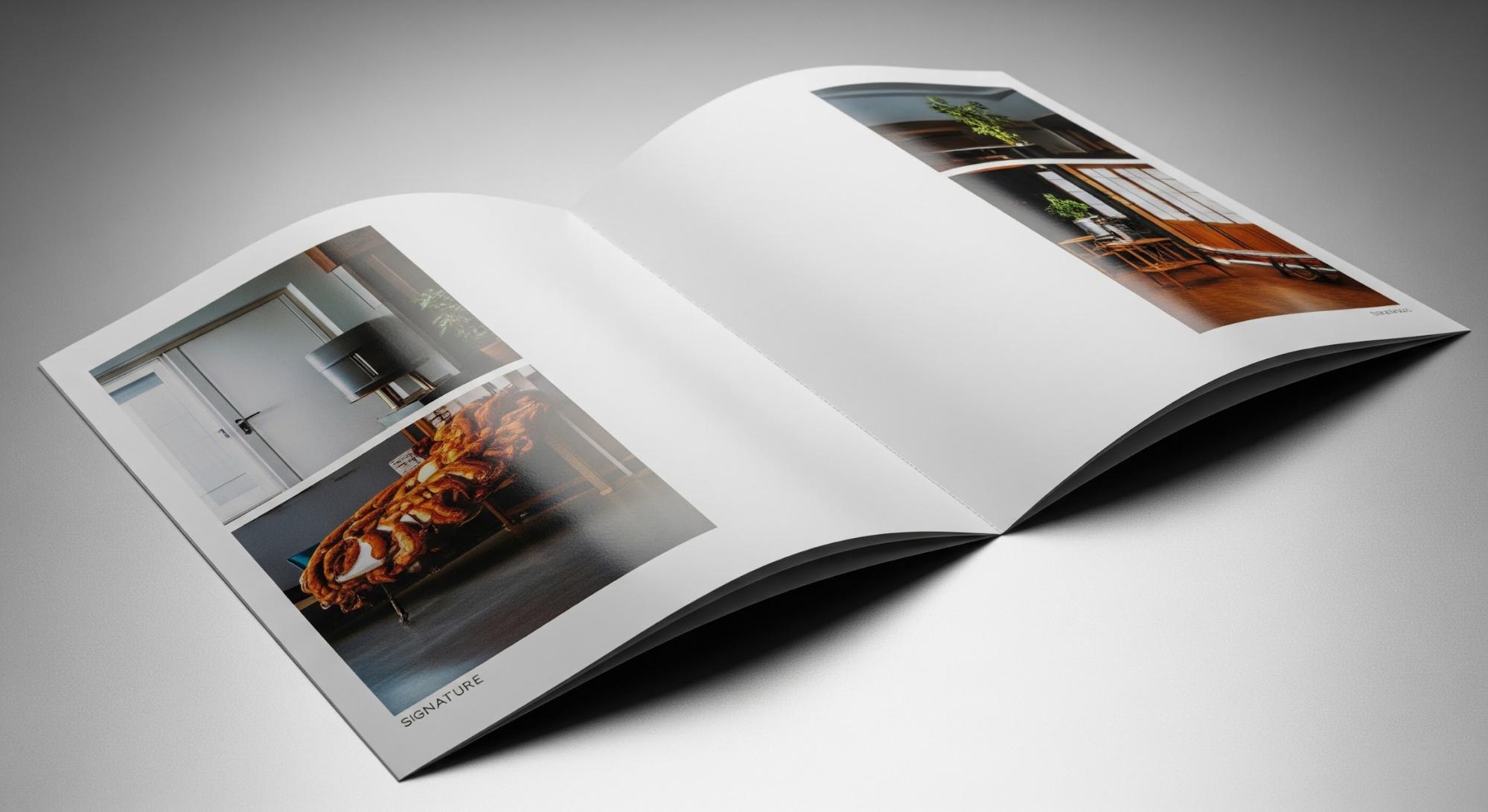
Saddle stitch binding is a mechanical process where folded sheets are nestled inside one another and secured through the fold line with wire staples. It is a staple (pun intended) of the commercial print world because it turns flat paper into a professional booklet quickly. In the industry, the “saddle” refers to the metal apparatus the paper sits on during the stapling process.
The sheets straddle the saddle like a rider on a horse.
Don’t be afraid: the name sounds more complex than the actual mechanism. It is a high-speed solution that works perfectly for specific page counts. If you have ever flipped through a comic book or a neighborhood newsletter, you have held a saddle-stitched piece.
Saddle Stitch Binding Factors
| Factor | Technical Threshold | Recommendation |
| Page Count | 8 to 64 pages | Use saddle stitch binding |
| Page Multiples | Must be divisible by 4 | Add blank “Notes” pages if at 10 or 14 |
| Spine Width | Under 0.25 inches | Ideal for stapled finishing |
| Budget | Low to Medium | Most cost-effective binding method |
| Functionality | Must lay flat | Staples allow for hands-free reading |
Understanding the Mechanics of Saddle Stitch Binding
When we look at the technical side of saddle stitch binding, we have to talk about signatures. A signature is a large sheet of paper that, once printed on both sides and folded, creates four individual pages. Because of this, your booklet must have a total page count that is a multiple of four. If you try to submit a 10-page document, you are going to end up with two blank pages at the back. It is a physical constraint of the paper folding process (i.e., a single piece of paper that is folded in half always has 4 sides).
The most common applications for this style involve marketing collateral where portability is key. Because there is no glued spine, the booklet remains lightweight. It fits into a briefcase or a display rack without adding bulk. However, there is a limit. If you try to cram 100 pages into a saddle stitch machine, the book will “v-shape” and refuse to stay closed. This is why we recommend moving to perfect binding once you cross the 64-page threshold.
Common Sizes and Strategic Use Cases
In the Los Angeles market, two specific dimensions dominate the requests we see daily. The first is the digest size. This is popular for poetry zines, event programs, and instructional manuals. You can find high-quality saddle stitch booklet printing (size 5.5 x 8.5) options that maximize paper yield and minimize waste. It is a compact format that feels intimate and easy to carry.
The second heavy hitter is the standard letter size. This is the go-to for corporate reports, magazines, and large-scale photography lookbooks. Using saddle stitch booklet printing (size 8.5 x 11) provides ample real estate for complex charts or high-resolution imagery. These two sizes are the most common for saddle stitch binding because they align with standard paper mill cuts, which keeps your overhead low.
Dealing with the Problem of Creep
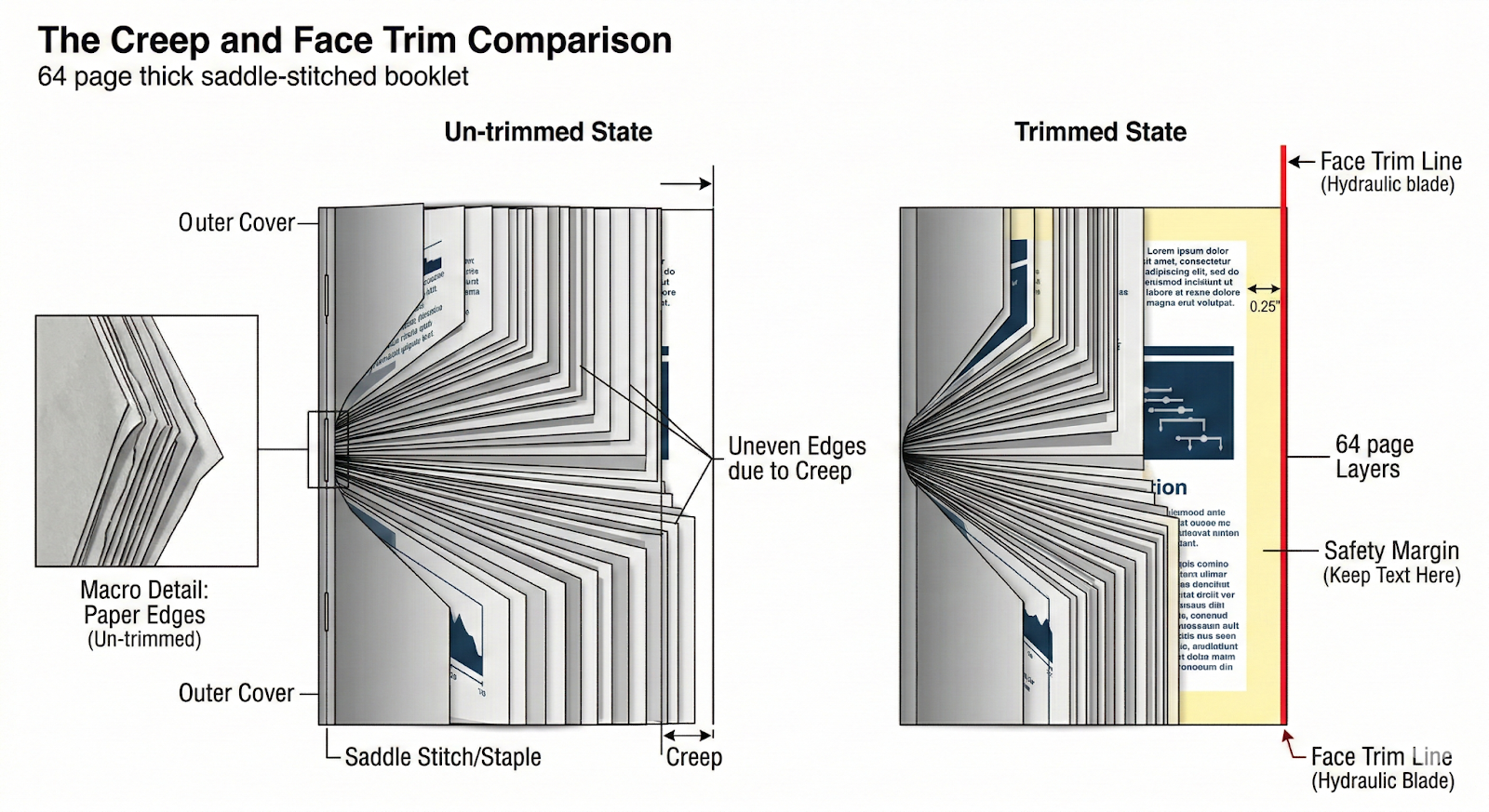
One technical tradeoff that many designers overlook is “creep.” When you fold several sheets of paper inside each other, the innermost sheets start to protrude further than the outermost sheets. When the printer trims the edges to make them flush, the “safe zone” on those inner pages gets smaller.
If your design has page numbers or fine text too close to the outer edge, they might get cut off on page 30 while looking fine on page 2. Professional print shops use software to compensate for this, but a human expert will always tell you to keep your margins generous. We suggest at least 0.25 inches of inner margin to account for this physical shift.
Frequently Asked Questions about Saddle Stitching
How many pages can a saddle stitch booklet have? Saddle stitch booklets typically range from 8 to 64 pages. The total page count must be a multiple of four because each folded sheet creates four numbered pages. If a document exceeds 64 pages, the “creep” becomes too significant, and a glued perfect bound spine is required to keep the book from bowing open.
What are the most common sizes for stapled booklets? In professional printing, the two standard dimensions are 5.5 x 8.5 inches (digest size) and 8.5 x 11 inches (letter size). Choosing size 5.5 x 8.5 is ideal for programs and zines, while 8.5 x 11 is the industry standard for catalogs and corporate reports.
Does saddle stitch binding affect the design margins? Yes. Because the inner pages of a booklet are pushed outward during the folding process (a phenomenon known as “creep”), designers must maintain a safety margin of at least 0.25 inches. This ensures that text or page numbers near the outer edge are not cut off during the final face trim.
When Should You Choose This Binding?
You should choose saddle stitch binding when speed and budget are your primary drivers. Unlike perfect binding, which requires hours for the glue to cure and set, stapled books are ready for packing the moment they come off the line.
- Event Programs: For one-day events where you need 500 copies fast.
- Lookbooks: When you want a sleek, modern feel without the rigidity of a hardback.
- Newsletters: For monthly mailers that need to be thin enough for standard postage rates.
- Catalogs: Short-run seasonal menus or product lists.
- Zines: The classic DIY aesthetic that relies on accessible production.
If you are a business owner in the Arts District or anywhere else in LA, you know that timing is everything. A 1000-page manual is not going to work with this method, but a 32-page summary of your annual growth is perfect. It looks professional, it feels sturdy, and it doesn’t break the bank.
Paper Weights and Texture Decisions
The feel of the paper determines the perceived value of the content. If you use a 60lb house bond, the booklet feels like a grocery store circular. If you move up to an 80lb or 100lb gloss text, the colors become more vibrant and the “snap” of the page as it turns feels more expensive.
We often suggest a “Heavy Cover” option. This means using a thicker cardstock for the outside wrap (like a 10pt or 12pt gloss cover) while keeping the inside pages thinner. This gives the booklet structural integrity. It prevents the staples from tearing through the paper if the book is opened and closed frequently.
Why Local LA Production Matters
Working with a local shop like Guru Printers means you can see the paper proofs before the full run. Colors on a screen never match colors on paper. Seeing a physical proof of your saddle stitch binding project ensures that the “money problem”—wasting a 1,000-copy run on a typo or a color shift—never happens.
We take pride in being part of the local economy. We use the trade names and the specific equipment that people in this city expect. We aren’t just a website; we are a shop with real presses and real people who catch errors before they go to print.
For a quote on your next project or to discuss custom dimensions, visit our Contact Page or call us at (213) 612-4451. We are here to make sure your brand looks as sharp as your ideas.